
How to Find Recently Released Oklahoma County Inmates
Start with the county jail roster. The Oklahoma County JailTracker system includes release fields, so it can show a final release date and time, and it offers a released-since filter when that option is enabled. If a person no longer appears as a current inmate, that usually means they were released, transferred, or moved to another system. The roster is a point-in-time view, so always confirm a recent change with the detention center if the timing matters.
Release can happen for many reasons. A person may post bond, finish a sentence, win a dismissal, or transfer to the Oklahoma Department of Corrections or federal custody. Each path leads to a different record. If the county roster no longer lists someone, the next step is to check the state or federal tools below, or to set up an alert so the next change comes to you.
It helps to know why the roster changed. A transfer to state prison moves the record to the Department of Corrections, while a federal case moves it to the Bureau of Prisons. A dismissal or a completed sentence ends custody outright. A bond release sends the person home while the case continues. Each of these shows up differently across the systems, so a person who vanishes from the county roster has not always gone home. Checking the docket on OSCN often explains the change, because a release or dismissal order will appear there.
Setting Up Release Notifications with VINELink
VINELink is a free national service that tracks custody status and sends alerts. Instead of checking the roster over and over, you register once and get a message when the status changes. Victims use it most, but anyone can sign up. The county links VINELink for custody notifications tied to Oklahoma jails.
To set it up, go to VINELink, select Oklahoma, and search by name or ID. Then register a phone number, email, or text alert. The service confirms your contact and notifies you of a release, a transfer, or another change. Victims can also reach the District Attorney's Victim Witness Center for support that goes beyond an automated alert. An alert is especially useful when a person is held on bond, because a release can come at any hour and a notification reaches you faster than a manual check of the roster. Keeping your contact details current with the service ensures the alert actually arrives.
Searching State Released Inmates with the Oklahoma DOC
When someone leaves the county jail for state prison, the Oklahoma Department of Corrections becomes the right source. The DOC offender lookup searches by DOC number or name and shows custody and supervision status, which includes people who have been released from state custody. The table lists the search fields.
| Field Label | Type | Required | Notes / Format |
|---|---|---|---|
| OK DOC number | Text | No | Most precise state search. |
| Last Name | Text | Conditional | Name search field. |
| First Name | Text | No | Narrows the list. |
| Gender / Race / Age | Filters | No | Refine when the form offers them. |
| Search / Reset | Button | n/a | Runs or clears the search. |
Use the Oklahoma DOC offender lookup to check a state record. A DOC profile commonly shows the name, the DOC number, the facility or status, the offense, and reception and discharge dates, along with aliases where they are public.
Searching Federal Released Inmates with the BOP Locator
Federal custody is a separate system. The Federal Bureau of Prisons runs an inmate locator that covers people in BOP custody and those released since 1982. If an Oklahoma County case moved to federal court, this is the tool to use. The locator interface is shown below.
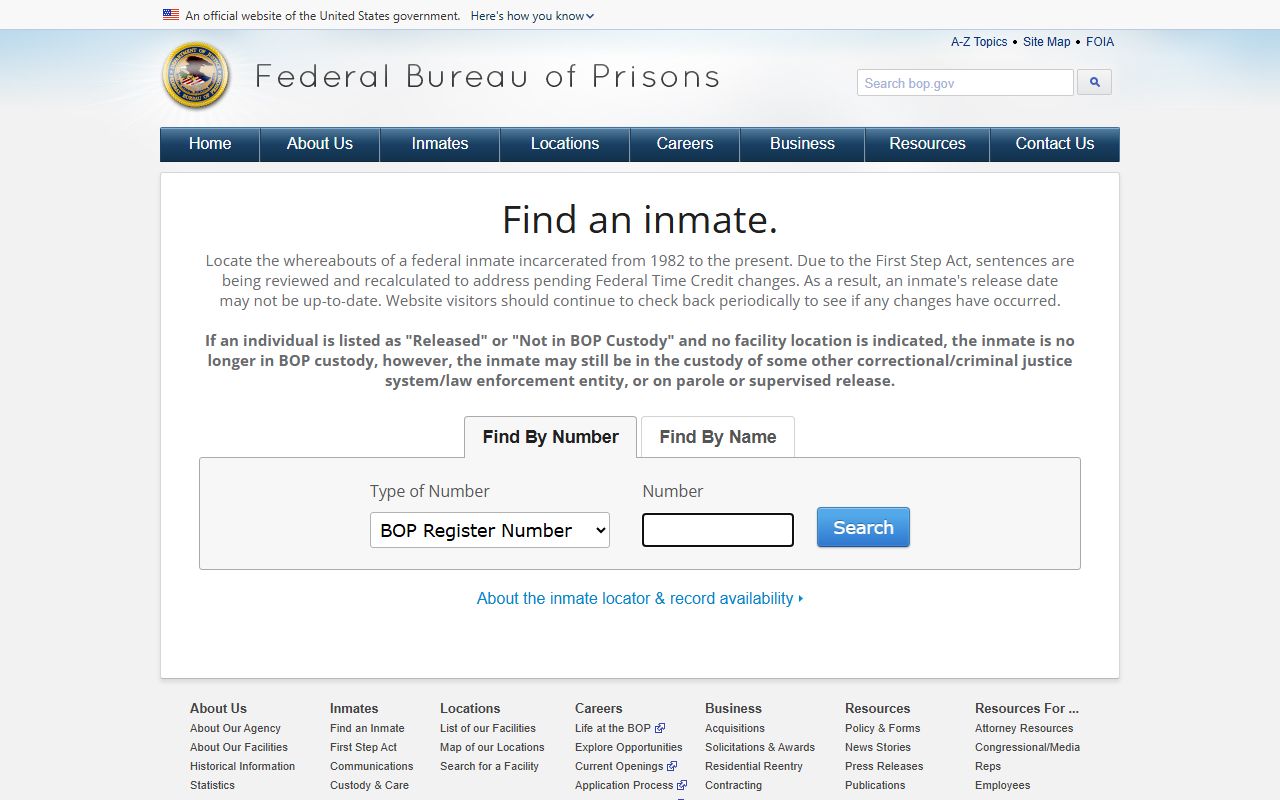
The BOP inmate locator searches by number or by name. The table lists the fields it offers.
| Field Label | Type | Required | Notes / Format |
|---|---|---|---|
| Search by Number | Tab | Conditional | BOP Register, DCDC, FBI, or INS number. |
| First Name | Text | Conditional | Used in a name search. |
| Last Name | Text | Conditional | Used in a name search. |
| Race | Dropdown | No | Optional filter. |
| Age | Number | No | Optional filter. |
| Sex | Dropdown | No | Male or female. |
A BOP result shows the name, the register number, age, race, sex, and either a release date or an in-custody status with the facility.
Verifying a Release in Person or by Phone
Online tools are fast, but they can lag. When the timing of a release matters, confirm it directly. Call the detention center or check the jail tracker, and cross-check the court docket on OSCN for a release or dismissal order. If property or paperwork is involved, the detention center, not the Court Clerk, handles release procedures.
Keep the booking number handy when you call, since it speeds up any lookup. If a person transferred rather than went home, the staff can often tell you which system now holds the record, so you know whether to check the DOC lookup, the BOP locator, or another county. A phone call is also the surest way to settle a timing question, because the online roster can lag the actual release by hours, and a release time printed online is not a guarantee of when a person walks out the door.
Parole, Probation, and Court Services
Many people leave custody under supervision rather than fully free. Probation and parole come with conditions, check-ins, and sometimes drug testing. In Oklahoma County, the Court Services department supports supervision, pretrial, and compliance work tied to the courts. Its page is shown below.
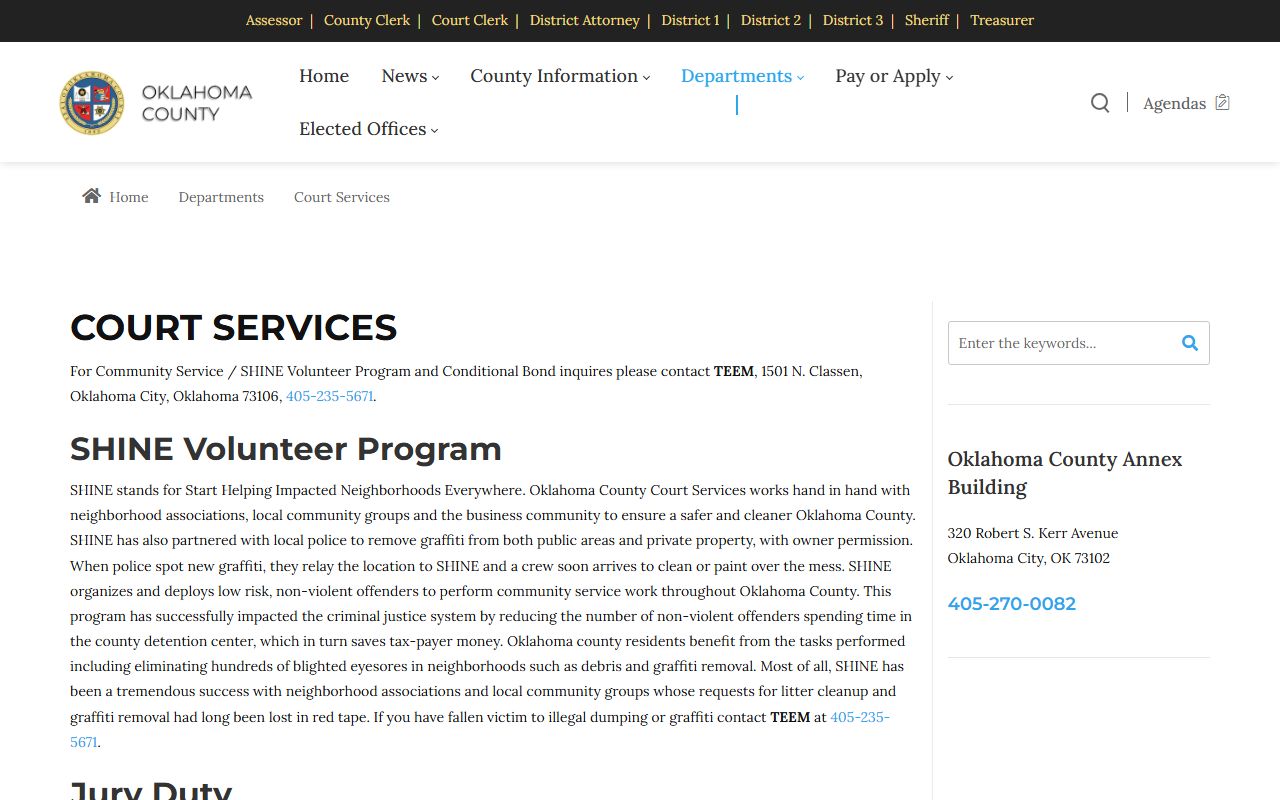
The Court Services page is the place to learn about local supervision and compliance programs. State parole decisions run through the state pardon and parole process, which is separate from the county and tied to the Department of Corrections.
The Sex and Violent Offender Registry
Some released people must register under state law. The Oklahoma Sex and Violent Offender Registry is public, and it stays current after release for those who are required to report. It is a separate system from the jail roster and the DOC lookup.
You can search the Oklahoma Sex and Violent Offender Registry by name or by area, including Oklahoma County. The same registry is covered with a screenshot on the inmate records page, where the search fields are listed.
Reentry Resources in Oklahoma County
Coming home from jail or prison is hard, and Oklahoma County has resources that help. Legal needs, work, housing, and treatment all matter for a stable return. The list below points to the kinds of help that are available, several of them tied to county and state offices.
- Legal help - the Public Defender for eligible criminal cases, plus Legal Aid Services of Oklahoma for civil matters.
- Court compliance - Court Services for supervision and program requirements.
- Work and training - second-chance employment and job-training programs.
- Treatment - community behavioral-health and substance-use providers.
- State reentry - Department of Corrections reentry materials for people leaving prison.
Verify the current contact details for each resource, since programs and providers change over time. A stable return often depends on lining up legal help, work, and treatment early, so it helps to reach out before release rather than after.
The Bond Release Process and Property
Many releases happen through bond. When a judge sets a bond, a person can be released after it is posted, either in cash or through a surety bondsman, while the case continues. The bond amount and type tie back to the court case, so confirm them on the docket and on the jail record before assuming a release will happen. A release on the person's own recognizance does not require money, but it still comes with a promise to appear and sometimes with conditions.
Release also involves paperwork and property. Personal property held at intake is returned through the detention center's release procedures, not through the Court Clerk, so questions about belongings go to the jail. A person released on bond who later misses a court date risks a new warrant, which can lead back to custody. For the case that controls a bond or a release, search court records on OSCN, and for a warrant that follows a missed date, see warrant records.
Civil Rights Restoration After Release
Release does not always restore every right at once. In Oklahoma, the right to vote returns once a person completes the sentence, including any term of supervision. Other rights, such as firearm rights, follow different rules and may require a separate legal step.
Because these rules turn on the specific case and sentence, a person with questions should confirm their status with the court or with counsel. For the case details that drive these questions, see court records and the access rules described there. A completed sentence, a deferred judgment, or an expungement can each affect what shows on a record and which rights return, so the safest step is to read the docket and ask the court rather than to assume.